The Advantages and Disadvantages of Floating Solar
Floating solar turns the dead space on reservoirs and lakes into a power generating asset. You'll often hear this referred to as “floatovoltaics” (FPV), and for developers or business owners facing land scarcity, it's an elegant fix. It allows you to preserve valuable ground for agriculture or real estate while capitalizing on water bodies that are otherwise just sitting there.
Space-saving is just the headline, though. You actually get a thermal bonus from the water itself. It acts as a natural coolant, boosting panel efficiency far beyond what you'd see on a baking hot roof. Conversely, the panels return the favor by shading the surface, which prevents evaporation and starves off algae blooms. While that sounds like a win-win, water brings a unique set of headaches. We need to look at whether the math actually makes sense for your project.
What is Floating Solar?
Floating solar isn't strictly "new" tech; it's just standard PV moved onto the water. Instead of driving metal piles into the ground, you're securing the modules onto a network of floating pontoons. The panels are the exact same units used on land, but the racking system here is designed for buoyancy.
You won't see these arrays braving the open ocean, though. They are strictly for calm, inland bodies like reservoirs (including hydro plants) or treatment ponds. You need that natural shelter to avoid the heavy wind and wave loads that would otherwise stress the structure.
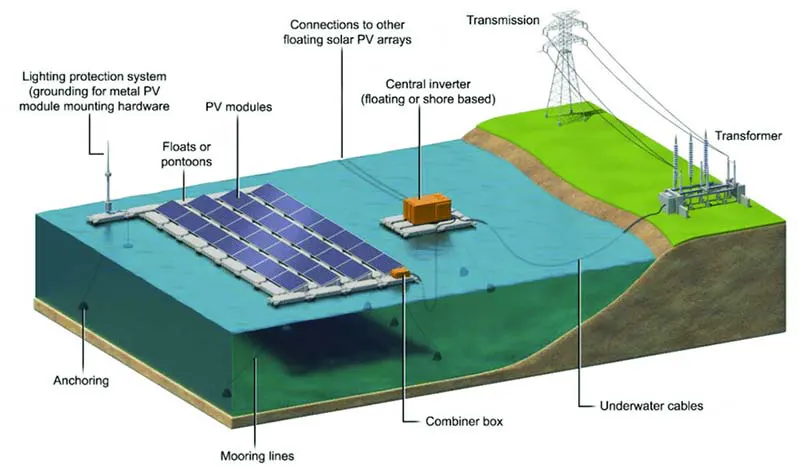
The power travels through submersible cables to reach the shore grid connection. It's a layout that turns a dormant water asset into a generator, all while leaving your valuable land untouched.
Key Components of a Floating Solar System
The panels are just standard modules, so the real engineering focus is heavily environmental. It comes down to making sure rigid electrical gear survives on a wet, constantly shifting foundation.
1. Solar Panels
You don't need exotic hardware here. Floating farms typically use the same reliable PV modules you see on ground mounts. That said, since water acts like a giant mirror, you'll usually see bifacial panels here. They grab direct sunlight from the top and the reflected light from the bottom, which boosts your output per square meter without adding more racking.
2. The Floating Platform
This replaces the steel racking found in traditional solar. Panels sit on a matrix of buoyant pontoons, usually molded from high-density polyethylene (HDPE). This material is the industry standard for a reason: it is tough enough to resist UV radiation and corrosion, yet flexible enough to ride the waves without cracking.
Watch: See How the Modular Floats Link Together
The entire structure is engineered not only to hold the panels at the optimal angle for sunlight, but also to withstand the forces of wind and waves.
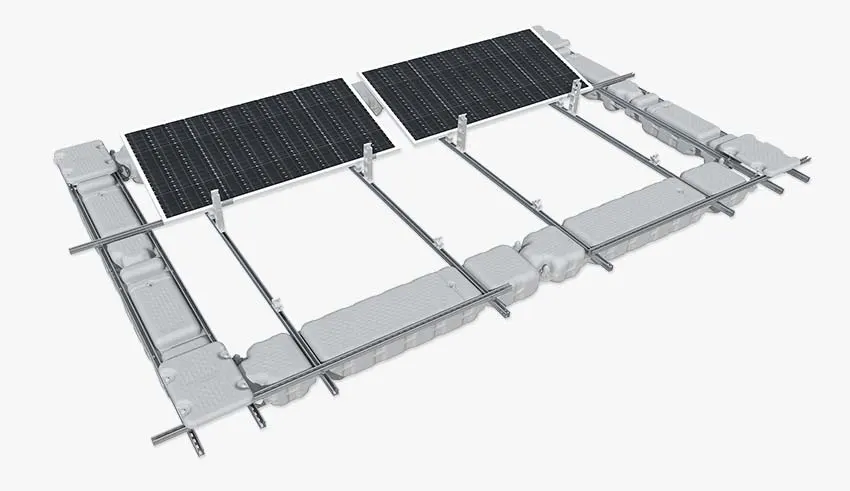
Mibet's Marketing Director, Tao Chen, explains the structure simply: "The floats link together to create the buoyant base on the water. Then, brackets made of aluminum alloy or coated steel are installed on top to both securely hold the panels and make the entire floating module more stable."
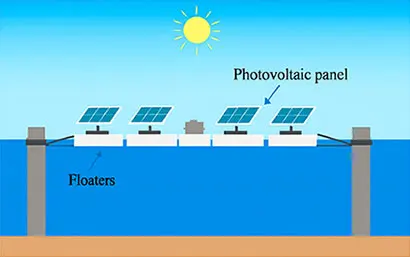
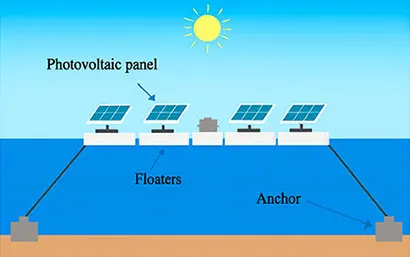
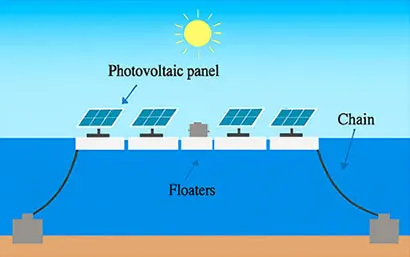
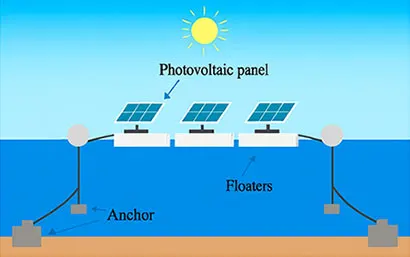
3. Mooring and Anchoring System
Your array acts like a giant sail in the wind, so you can't just let it drift. A robust mooring system tethers the installation to the reservoir bed or the shore using high-strength cables.
The engineering here is tricky. The lines must be tight enough to hold the system against wind loads but have enough slack to accommodate water level variations. If you are installing on a hydroelectric dam where levels fluctuate by meters, this dynamic adaptability is the most critical part of the design.
4. Inverters
You have two main strategies for converting DC power to AC here. You can mount string inverters directly on the floating platform, or run DC cables to a central inverter station on land.
Putting inverters right on the platform is an option, but moisture is the enemy. You need enclosures with serious Ingress Protection (IP) ratings. If you skimp here, the humidity and constant spray will short out the electronics way faster than a land-based setup.
5. Marine-Grade Cabling
Standard land-based wiring is useless here. You have to run submersible, marine-grade DC cables to get the power back to shore. It's all about the insulation: it has to block water ingress and survive being soaked 24/7. If this cable degrades, the energy never leaves the lake, so it has to last the full 25-year project life.
The Advantages of Floating Solar
1. Preserving Valuable Land
Land availability is usually the dealbreaker for developers. Ground-mounted projects demand serious acreage—plots that are often far more valuable for farming, housing, or conservation. Shifting the array onto a reservoir removes that soil from the equation entirely. This approach lets you deploy megawatt-scale generation without getting dragged into a battle over land use.
2. Natural Cooling Boosts Yield
Photovoltaics have a heat problem: as temperatures rise, voltage drops. Water solves this problem naturally. The evaporative cooling effect from the water body keeps the operating temperature of floating panels significantly lower than rooftop or ground-mounted equivalents.
In real-world terms, this thermal benefit translates to an energy yield increase of 5% to 15%. If you are operating in a hot climate, that efficiency gap is money in the bank.
3. Capturing the "Albedo" Effect
Water creates a unique light environment. Bifacial modules are a no-brainer here. They catch direct sun from the top and reflected light from the water and pontoons below. That rear-side gain adds capacity without increasing the system footprint.
4. Water Conservation & Quality
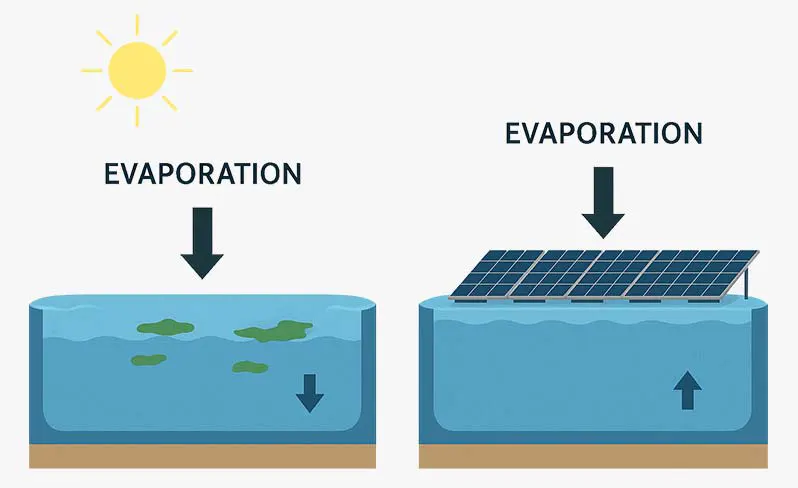
The array effectively acts as a lid on the reservoir. It physically blocks the wind and sun, which can slash evaporation rates by up to 30%. For hydro operators in drought zones, saving that water is often worth more than the power itself.
Shading the water also cuts off the light algae needs to grow. Inhibiting blooms means cleaner water entering the intake and lower filtration costs for treatment plants downstream.
5. Smarter Project Economics
While the floating hardware (pontoons and mooring) can be more expensive than steel racking, you save heavily elsewhere. Floating solar eliminates the need for:
- Civil works: No tree clearing, grading, or trenching.
- Land costs: No expensive leases or property taxes on prime land.
- Maintenance: No grass to mow or vegetation management.
Also, since many projects sit on existing hydro dams or treatment plants, the grid infrastructure is usually right there. You can tap directly into existing transmission lines, avoiding the massive cost of building new substations.
6. Bankability and Market Maturity
A few years ago, floating solar was a niche experiment. Today, it is a bankable asset class. We are finally seeing governments unlock real incentives, and big-name manufacturers are rolling out gear that is actually built for water. That combination has taken a huge bite out of the risk. Plus, as the supply chain tightens up, prices are dropping fast enough to give traditional ground-mounts a run for their money.
The Disadvantages of Floating Solar
1. Higher Upfront CAPEX
There is no way around it: building on water costs more than building on dirt. You aren't just paying for modules and inverters; you are paying for a specialized floating structure, heavy-duty anchoring, and marine-grade cabling.
Generally, you can expect the installation costs to run 10–25% higher than a comparable ground-mounted project. While the superior energy yield often balances the books over time, that initial sticker shock can sometimes complicate financing or extend your payback period.
Upfront Cost Comparison – Floating vs. Ground-Mounted
| System Type | Relative Upfront Cost |
|---|---|
| Ground-Mounted Solar | Baseline |
| Floating Solar | 10–25% Higher |
2. The Test of Time
Floating solar hasn't been around long enough to offer a 25-year track record. Because the tech is so new, we lack deep historical data; in fact, most utility-scale arrays have been in the water for under a decade.
This creates valid questions about longevity. Stakeholders need to know if the hardware can actually survive twenty years of moisture, intense sun, and the physical strain caused by fluctuating water levels. There is also the risk of severe weather. A poorly engineered system facing a heavy storm could suffer catastrophic failure.
But the technology is proving to be tougher than expected.
We saw a prime example of this resilience with Mibet's 16MW project in Zhanjiang, China. In 2024, that facility took a direct hit from a super typhoon and came out unscathed. Real-world stress tests like that go a long way in proving that modern floating designs can handle the elements.
Source: https://cleantechnica.com/2024/09/23/floating-solar-project-withstands-super-typhoon-capricorn/
3. Strict Site Requirements
Floating solar isn't for everywhere. It relies heavily on specific conditions, specifically calm, artificial waters like reservoirs, quarries, or treatment ponds.
For residential users or businesses without a private water body, this clearly won't work. Also, consider the current activity on the water. If a lake is already a hub for fishing or boating, blocking it off with floating plastic arrays will inevitably create conflict with the locals.
And the ocean? Despite the hype around "offshore floating solar," putting these systems at sea is a logistical nightmare. The environment is brutal: saltwater destroys standard components, and ocean waves create physical stress that inland reservoirs simply don't have. Although some pilot projects exist, making offshore systems tough enough to survive is incredibly expensive.
O&M Strategies for Floating Solar
The damp, moving environment puts constant stress on your hardware. You have to catch issues early instead of waiting for a breakdown.
| Task | Frequency | Best Method |
|---|---|---|
| Panel & Platform Cleaning | Monthly / Quarterly (As needed) | Visual inspection, soft brushes |
| Above-Water Mooring Check | Every few months | Visual inspection for fraying/tension |
| Corrosion & UV Check | Annually | Visual inspection of racking & floats |
| Electrical System Test | Annually | Thermal imaging & insulation testing |
| Underwater Mooring Check | Every 1–3 years | Divers or ROVs |
1. The Bird Problem (and Soiling)
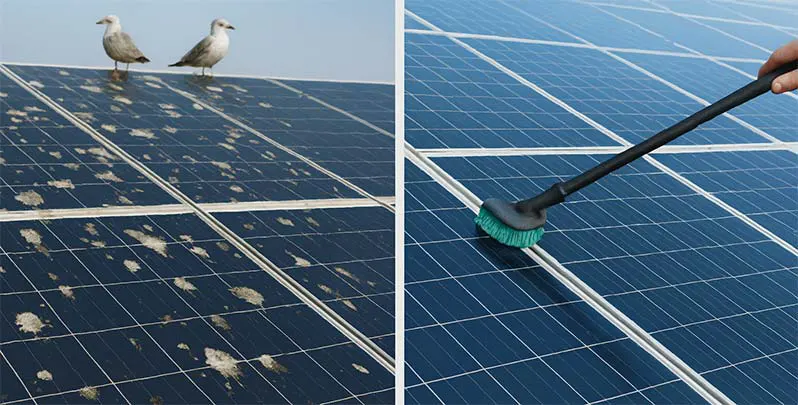
Water bodies are natural magnets for birds. Unfortunately, this makes bird droppings the number one maintenance headache for floating solar. Unlike dust, rain rarely washes this mess away effectively. When that waste builds up, it creates shading. That shading creates heat—specifically "hot spots"—that can physically burn out the solar cells. Once that happens, your warranty is likely void.
Rain is not a cleaning strategy. You are going to need manual cleaning crews using water and soft bristles to scrub the grime off and maintain performance.
2. Combating Corrosion and UV
The combination of constant moisture and reflected UV light is brutal on materials. You need to inspect the metal racking and fasteners annually for any sign of rust.
The plastic floats need attention, too. Even with UV protection, that HDPE material will eventually degrade and turn brittle. If a pontoon cracks and takes on water, it becomes dead weight that drags on the rest of the metal frame. Spotting a hairline fracture now is much easier than fixing a warped system later.
3. Mooring and Anchor Checks
The mooring lines are the only thing stopping your investment from drifting across the reservoir. Tension management is the critical factor here:
-
Too loose: The array drifts and twists, potentially straining cables.
-
Too tight: Waves or wind loads could snap the lines or drag anchors.
You should visually check the above-water lines every few months. However, the real work happens underwater. We recommend sending divers or using ROVs every 1 to 3 years to inspect the chains and anchors on the reservoir bed.
4. Electrical Integrity
Putting high voltage equipment on water is inherently risky. An IP67 rating is not a permanent shield. The rubber gaskets inside are still going to age. It is only a matter of time before they become brittle and lose their seal.
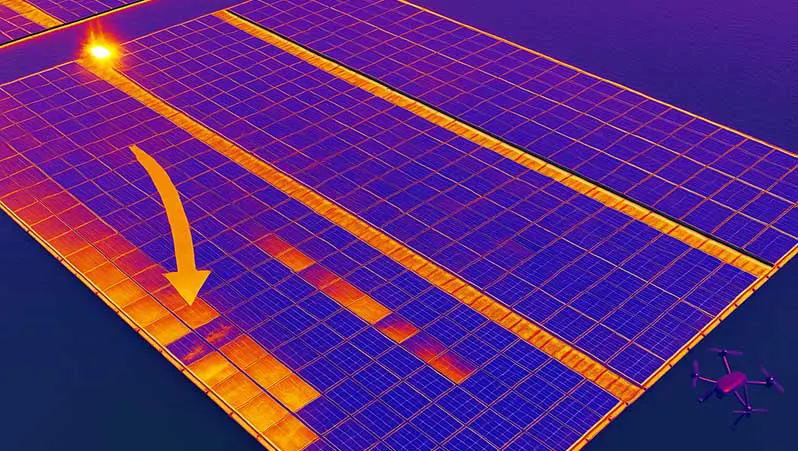
Make ground fault monitoring a priority. These alerts are usually the first clue that water has breached the cable insulation. Thermal imaging is also a fantastic tool here. It allows you to scan inverters and combiner boxes from a safe distance to spot overheating connections before they fail.
5. Crew Safety
You are not walking on a static roof anymore. You are standing on a deck that shifts with every wave, and that plastic surface gets incredibly slick when wet. Because footing is unpredictable, the rules are stricter:
- The Buddy System: Solo maintenance is a major safety risk. Always deploy technicians in pairs.
- Rescue Equipment: Keep life rings and a dedicated boat docked nearby for immediate access.
- Weather Watch: Maintenance stops immediately during high winds or storms.
Frequently Asked Questions
1.How long do floating solar panels last?
You can confidently plan for a 25-year operational life, just as you would with a ground-mounted system. The solar modules themselves are standard industry hardware guaranteed to perform for decades.
The real variable here is the floating structure. Since this industry is younger, we don't have thirty years of historical data to look back on yet. However, the pontoons are molded from HDPE reinforced with UV stabilizers. This material is engineered specifically to resist cracking and sun damage. With the right maintenance plan in place, your floating system will easily go the distance.
2.How are floating solar systems maintained?
Maintenance on water relies heavily on smart monitoring. Since walking the pontoons can be slow, operators typically use drones equipped with thermal cameras. These flyovers allow you to quickly spot physical damage or "hot spots" caused by bird droppings without sending a technician out on the water.
Skip the high-pressure washers. That kind of force is dangerous and can crack your modules or floats. It is better to just pump water from the reservoir and scrub with soft brushes. This keeps the panels clean without introducing harsh chemicals into the aquatic ecosystem.
Finally, you have to watch the waterproofing. Technicians need to regularly verify that junction box seals and cable insulation are holding up against the constant humidity.
3.How are the moorings & anchors maintained?
You treat this in two zones: above the surface and below it.
For the visible hardware, your technicians need to watch for frayed lines or rusting shackles. Waves mean constant friction. You need to catch that wear early so lines don't snap under the strain.
Under the surface, plan on sending divers or ROVs down every couple of years. Their job is to check for dragged anchors and—more importantly—scrub off the marine growth. A heavy buildup of mussels or algae adds unexpected weight and drag, which puts dangerous stress on the entire array during storms.
4.What impact do floating solar systems have on bird life?
There is a valid worry that covering the water pushes wildlife out. However, the reality on site is often different. The arrays tend to become new real estate for the locals. It is common to see birds, especially cormorants, claiming the pontoons as resting spots to dry their wings or scout for fish.
Smart design prevents conflict. By leaving wide gaps—often called "swim channels"—between the panel rows, developers create open lanes. This lets waterfowl dive and swim between the structures, allowing the plant and the wildlife to coexist.
5.Can floating solar systems withstand harsh winter conditions?
Yes, and they are already proving it in tough climates like the European Alps.
The engineering strategy here is about flexibility rather than resistance. The HDPE pontoons are engineered to withstand sub-zero temperatures and strong enough to bear heavy snow loads. Crucially, the mooring lines allow the array to rise and shift as the water turns to ice. This lets the system safely "ride" on top of the expanding ice sheet rather than fighting the pressure and risking structural damage.
Here is a list of the sources used to create this article.
-
https://www.eesi.org/articles/view/floating-a-new-solution-for-solar-deployment
-
https://en.wikipedia.org/wiki/Floating_solar
-
https://www.globalwaterforum.org/2024/10/24/floating-solar-does-this-new-energy-technology-affect-aquatic-life/
-
https://www.bloomberg.com/news/features/2023-03-07/the-power-of-floating-solar-panels
-
https://documents1.worldbank.org/curated/en/418961572293438109/pdf/Where-Sun-Meets-Water-Floating-Solar-Handbook-for-Practitioners.pdf
-
https://www.fornybarnorge.no/contentassets/5464eb5b7e80443e81cd156cb4c0fbc4/norwegian-floating-solar-pv-factsheet-updated-version.pdf