How to Select Suitable Concrete Roof Solar Mounting?
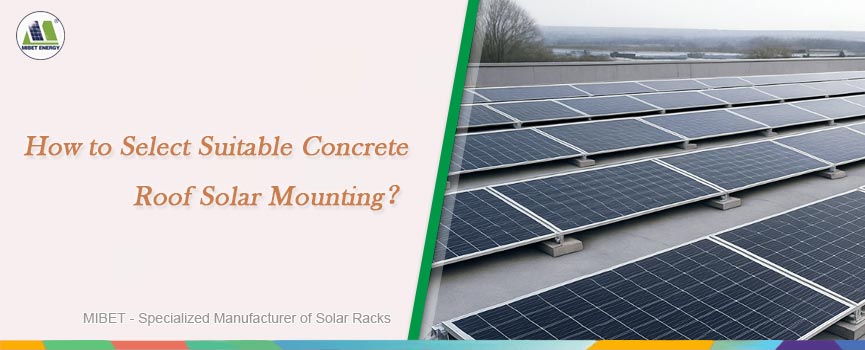
Commercial buildings with concrete flat roofs offer an ideal setup for solar PV systems. These roofs usually provide ample, open space and have a strong load-bearing capacity, making it straightforward to install sizable solar arrays.
Solar mounting on concrete roofs refers to how solar panels are secured on these flat surfaces. Most often, this means using ballasted mounting systems. These systems use weight, like concrete blocks, to hold panels in place instead of drilling into the roof. This non-penetrating method is a significant benefit for you as a building owner because it protects your roof's waterproof membrane and structural integrity by avoiding drilling. Plus, flat roofs give installers easier access, which simplifies both the installation and any future maintenance.
This guide will walk you through the key features and benefits of solar mounting systems designed for concrete flat roofs. We'll cover how to choose the right system and examine real-world examples to help you prepare for a successful solar project.
Key Features and Benefits of Flat Roof Ballasted Systems
Solar mounting systems for concrete flat roofs often use a ballasted design, meaning they rely on weight to keep your solar array securely in place. This approach offers several important benefits for your building and how you operate.
No Roof Penetrations
With ballasted mounting systems, there's no need to drill or bolt into your roof structure. Instead, these systems use carefully placed heavy blocks within mounting trays. Gravity then does the work of anchoring the solar panels securely. This non-invasive method is a big plus because it keeps your roof's waterproofing intact and helps maintain its warranty. You'll effectively sidestep the leak risks that can come from the hundreds of holes often needed for traditional racking systems.
Maintaining Roof Integrity
Because the mounting racks simply rest on your roof's surface (usually with a protective separation layer underneath), you significantly lower the risk of damage to the roofing membrane. The system is designed to spread its weight over a wide area, which prevents any single spot from bearing too much pressure.
Ballasted systems typically feature interconnected racking. This design helps distribute loads across many points, reducing the total ballast weight needed in any one location. Concrete roofs are naturally robust and have strong load-bearing capabilities, so they can generally handle the additional distributed load from a solar array quite well. This load is often only about 2–6 pounds per square foot (psf)—a level that most sound, well-maintained commercial roofs are already designed to support without any issues.
Quick and Easy Installation
Ballasted solar racking makes for a fast and efficient installation. Since there are no structural attachments to your roof, the process mainly involves laying out the racking, positioning the ballast blocks, and then securing the panels. This straightforward assembly means less complexity and a quicker installation time. Plus, this streamlined method requires fewer specialized tools and avoids disruptive roofing work, which directly cuts down on your labor time and overall project costs.
Optimizing Tilt for Energy and Wind
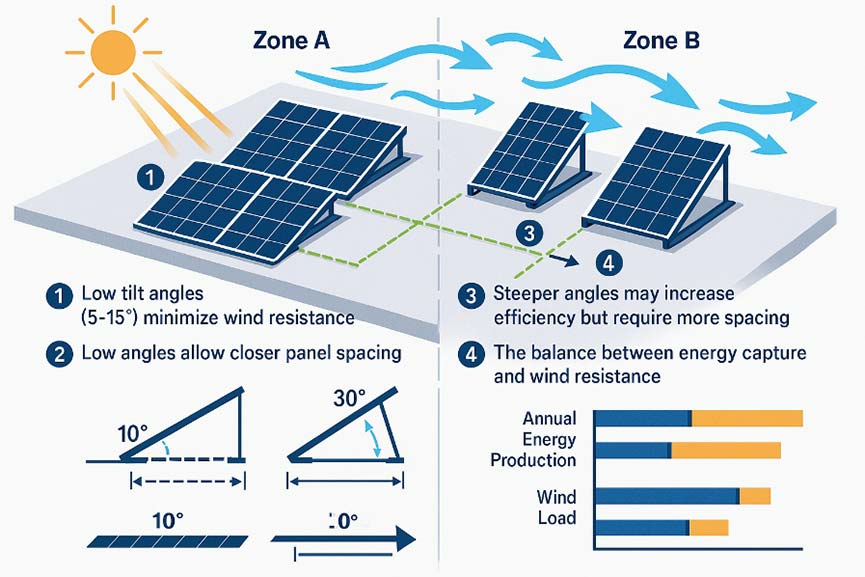
On flat roofs, mounting systems usually set solar panels at a slight, fixed tilt (typically around 5 to 15 degrees, often about 10 degrees). This angle is a careful balance: it helps capture solar energy effectively while also minimizing how much the wind can push against the panels. A low tilt angle means less wind resistance, reducing the risk of uplift in strong winds, but still allows rain to run off and helps keep the panels somewhat clean.
Plus, with a low tilt, panels can be placed close together without shading each other, letting you fit more panels onto your roof. If a roof has plenty of space, designers might opt for a steeper tilt (closer to the local latitude) for a small boost in efficiency. However, for most commercial buildings, a shallow angle and dense layout usually produce the most total energy for the roof area.
Keeping Maintenance Minimal
Ballasted systems are quite low-maintenance because they don't have mechanical anchors or moving parts. You won't have any roof penetrations to check periodically for leaks or wear. The main tasks are just routine panel cleaning and checking that the ballast and racking are still aligned. In practice, this usually means an annual check to ensure all ballast blocks are in place and that the panels are clear of debris and securely fastened, which is a quick job. The risk of corrosion or water damage is low since the roof membrane isn't disturbed, and the racking materials (often aluminum or galvanized steel with UV-resistant plastics) are built to last outdoors for a long time.
Built for Durability and Performance
Quality ballasted solar structure are engineered to handle decades of weather. They're designed to meet structural codes for wind uplift and, where necessary, seismic forces, often confirmed through wind tunnel tests or detailed engineering analysis. Many systems also meet tough industry standards, like UL 2703 for solar racking, which cover grounding, structural strength, and fire safety.
Once installed, the solar panels themselves typically come with 25-year performance warranties and can last over 30 years. The racking and ballast are built to last just as long, as they don't have critical parts that wear out. In short, a well-designed solar system on your concrete roof will provide reliable power for decades with very little looking after.
Saving Costs and Boosting ROI
Ballasted roof mounts can be very cost-effective. They save you the expense of hiring roofing contractors for penetrations or reinforcements and also cut down on installation time, both of which help lower project costs. For commercial-scale projects, the racking itself is usually a small part of the total system cost, and ballasted options are competitively priced.
More importantly, the energy your rooftop array generates means significant savings on electricity bills. Many commercial solar systems pay for themselves in just a few years and then provide virtually free power for the rest of their operational life. For instance, an analysis by Paradise Energy Solutions of over 160 commercial installations they completed found an average ROI of 13.5% and about a 10-year payback period. On top of that, installing solar can bring tax benefits and increase your property's value, further improving the financial returns.
Criteria for Selecting the Right Concrete Roof Mounting System
When planning a solar installation on your concrete flat roof, it's important to choose a mounting system that suits the building's specific conditions and your project goals. Key factors to consider include:
Structural Load Capacity
First, verify how much extra weight your roof can safely support. While ballasted arrays are relatively lightweight per square foot, a structural engineer should always review the building's design loads. Concrete roofs often have a high load capacity, but elements like existing equipment, snow load requirements, and necessary safety margins must be part of the calculation. The ballast weight and its distribution will be carefully engineered to ensure they don't exceed the roof's capacity. In practice, most modern commercial roofs can easily handle the roughly 4 to 5 pounds per square foot that a typical solar array might add, but this always needs to be confirmed for your specific building. If there are tighter weight limits, the system design might involve using additional attachment points (to reduce the amount of ballast needed) or lighter ballast materials.
Wind Loads and Climate Considerations
The mounting system must be designed for your site's specific wind conditions (and seismic conditions, if applicable). Wind uplift is a critical factor; in high-wind regions or on tall buildings, the solar array will experience strong upward forces. The racking you select should either be certified for those wind speeds or be adaptable enough (through added ballast or anchors) to resist this uplift. Engineers use standards like ASCE 7 in the U.S. to calculate wind pressure, and many ballasted racks undergo wind tunnel testing for this purpose. Ensure the system documentation provides clear guidance on ballast requirements for different wind zones. For very exposed roofs, such as those on high-rises or in open terrain, consider a system with integrated wind deflectors or a hybrid mounting approach that combines ballast with some attachments.
You also need to account for other local climate loads, such as heavy snowfall. Snow can add significant weight and also increase wind drift forces. Because of this, the mounting design in snowy areas might require extra ballast or a slightly different layout to manage these additional stresses.
For superior wind performance, see our ballasted system with wind deflectors: www.mbt-energy.com/products/roof-pv/flat-roof-pv/2401241.html
Roofing Material and Waterproofing
Check that the mounting system is compatible with your roof's surface. Most commercial concrete roofs are covered with a waterproof membrane (like EPDM, TPO, or bitumen). Ballasted systems should always include protective mats or padding between the racking components and this membrane to prevent any rubbing or abrasion. Ensure the racking has smooth, rounded edges or rubber coatings where it makes contact with the roof. It's also wise to involve your roofing contractor or the membrane manufacturer if you have any questions; some roof warranty providers have specific guidelines for installing solar arrays. The system should not puncture or damage the roofing material. If any attachments are absolutely necessary, they must be properly flashed and sealed to maintain waterproofing.
Furthermore, the array layout must be planned to keep drains, scuppers, and gutters clear so that water runoff isn't blocked. Standing water can damage a roof over time, so careful planning is needed to maintain clear drainage paths. Most ballasted designs allow for gaps or have leg assemblies that can bridge over minor obstructions.
Tilt Angle and Energy Production
Decide on the mounting tilt and layout that best meets your energy generation goals. As mentioned earlier, ballasted mounts usually feature a fixed tilt, often between 5 and 15 degrees. A steeper tilt can improve winter energy production and overall efficiency per panel, but it also means you'll need more space between rows (reducing the total number of panels that can fit) and it presents a higher profile to the wind. On the other hand, a low tilt allows for a very dense array and is often preferred for maximizing the total kilowatt-hours generated annually.
To make the best choice, evaluate your site's solar irradiance (the amount of sunlight it receives) and your energy usage patterns. If your main goal is the maximum annual energy yield from the available roof space, a dense, low-tilt configuration will likely deliver the greatest total output. If your priority is the highest efficiency per panel or better performance in winter, a slightly higher tilt might be more suitable. In all cases, ensure the tilt angle of your chosen racking is appropriate for your geographical latitude and that there's no significant shading from nearby structures or rooftop mechanical units.
Building Height and Parapets
The height of your building and the presence of any parapets will influence your choice of mounting system. Parapets can offer some wind shelter, which may mean the solar array experiences lower wind forces and could potentially require less ballast. If your roof has high parapets, make sure they won't shade the panels at low sun angles, although this is usually only a concern in winter or during early morning and late afternoon. Very tall buildings might experience extreme wind conditions at roof level. In these cases, check that the racking system is rated or has been tested for high-wind deployment, or plan for additional anchoring. Local building codes sometimes have special requirements for high-rise structures, which your engineering team will need to address.
Array Layout and Roof Integration
When selecting a concrete roof solar mounting, carefully consider how it will fit on your specific roof. Some systems offer more layout flexibility than others. Will you need to work around skylights, HVAC equipment, or various roof section lines? Choose a racking solution that can be arranged in the necessary block sizes and orientations to accommodate these features.
Also, think carefully about maintenance access. It's often beneficial to leave small walking paths or clear areas so technicians can easily reach equipment like HVAC units or service the solar panels themselves. While this might slightly reduce the total number of panels you can install, it can save considerable time and effort down the line. For this reason, many commercial installations include an accessible perimeter border and occasional aisles between panel sections. Ensure the system you choose can accommodate such spacing; a plus for most ballasted racking is that it can be arranged in virtually any pattern, allowing for good customization.
See all our concrete flat roof mounting options to ensure the perfect layout for your project: www.mbt-energy.com/products/roof-pv/flat-roof-pv
Quality and Certification
Not all mounting systems are created equal, so it's best to opt for a reputable, certified product that meets established industry standards. Look for systems that comply with UL standards (in the U.S.) or equivalent international standards for solar racking. These standards typically cover essential aspects like electrical bonding and grounding, fire safety, and mechanical load resistance. Check the manufacturer's track record; systems with numerous successful deployments and possibly an ISO certification for their manufacturing processes can provide extra confidence. Also, consider the warranty offered for the racking itself, as many quality manufacturers offer 10 to 25-year warranties on their mounting hardware. Since your solar panels are designed to last 25 years or more, you'll want mounting equipment built for similar longevity. Using an established, certified product will also generally make it easier to obtain the necessary engineering letters or documentation for permits.
Contractor and Engineering Involvement
Perhaps the most crucial factor is working with experienced professionals. Ensure that a licensed professional engineer (P.E.) is involved to review and approve the mounting design. They will verify the load calculations, the ballast plan, and any attachments required to meet building codes. A skilled solar EPC company or contractor will know how to integrate the mounting system with your roof correctly and without causing issues. It's also a good idea to engage your roofer, if needed, to inspect the roof's condition before the installation and again afterward. Ultimately, selecting the right system isn't just about the hardware; it's equally about the expertise of the team designing and installing it. A great product installed poorly can still lead to problems, whereas a competent design and installation team will ensure even a challenging roof project is completed successfully.
Real-World Applications and Case Examples
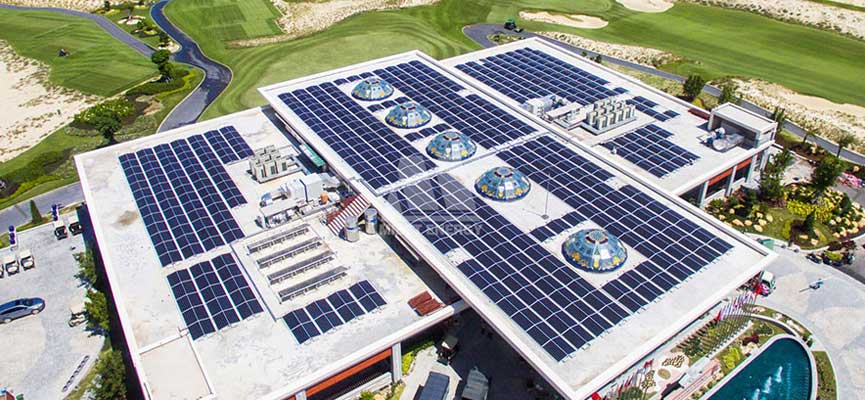
Thousands of commercial buildings worldwide have successfully adopted concrete flat roof solar mounting systems. Here are some common ways businesses are using them and the results they're getting.
Warehouse and Distribution Centers
Large warehouses with concrete decks are excellent candidates for solar energy, typically offering expansive flat roofs and having significant power needs during daytime hours. For instance, a warehouse with about 100,000 square feet of roof area can usually accommodate a 1 MW solar array (approximately 1,000 kW) using a dense ballasted layout. In a location with good sunlight (around 1,400 kWh/kW per year), such a system could generate approximately 1.4 to 1.5 million kWh of electricity annually. At a commercial power rate of $0.10 to $0.15 per kWh, this can translate to roughly $150,000 or more in electricity savings each year.
Retail Stores and Shopping Centers
Big-box retail stores, such as supermarkets and home improvement stores, commonly have flat concrete roofs and are increasingly embracing solar power. Notably, corporations are a major driver of new solar capacity. In the U.S., corporate solar procurement, including onsite solar, now accounts for over 18% of the total installed solar capacity nationwide. Clearly, solar adoption is a significant and growing trend in the retail sector.
Solar Capacity Contribution: www.energy.gov/eere/solar/articles/solar-means-business-top-us-corporate-solar-users
Solar Procurement Share: www.ourenergypolicy.org/resources/solar-means-business-2024/
Industrial and Manufacturing Facilities
Factories and industrial plants often have substantial power needs, which solar energy can effectively help offset. A manufacturing building with a concrete roof can support a large PV system without interrupting operations on the factory floor below. For example, automotive and electronics manufacturers have installed multi-megawatt solar arrays on their production facility roofs to supply a significant portion of their energy demand and protect against fluctuating utility costs.
See our 22MW ballasted solar installation on a flat roof. Project details: www.mbt-energy.com/projects/roof-pv/2407293.html
Office Buildings and Campuses
Even mid-size office buildings with flat roofs are now installing solar systems, typically ranging from tens to the low-hundreds of kilowatts. A 50 kW system on an office roof can produce around 60,000 to 70,000 kWh per year. This is often enough to noticeably reduce utility bills or support new electrical loads, like EV charging stations for employees.
Ready to explore solar for your building?
Solar technology is now more efficient and affordable than ever, and current financial incentives make it a very favorable time to invest. Every month you delay is another month you could be facing higher-than-necessary utility bills and missing out on the opportunity to produce your own clean power right on-site.
Our team of solar experts is ready to assess your concrete roof's solar potential. We can provide a customized proposal detailing projected savings and your return on investment (ROI), and, of course, answer any further questions you might have. Contact us today to learn how we can help power your commercial building with clean, renewable solar energy.

Tao Chen
Marketing Director & IT Director · MIBET ENERGY
MIBET is a global designer and manufacturer of solar mounting systems. With over 10 years of professional experience, Tao Chen regularly contributes articles to our blog on structural design, installation, and maintenance, offering valuable guidance for navigating the complexities of solar projects.