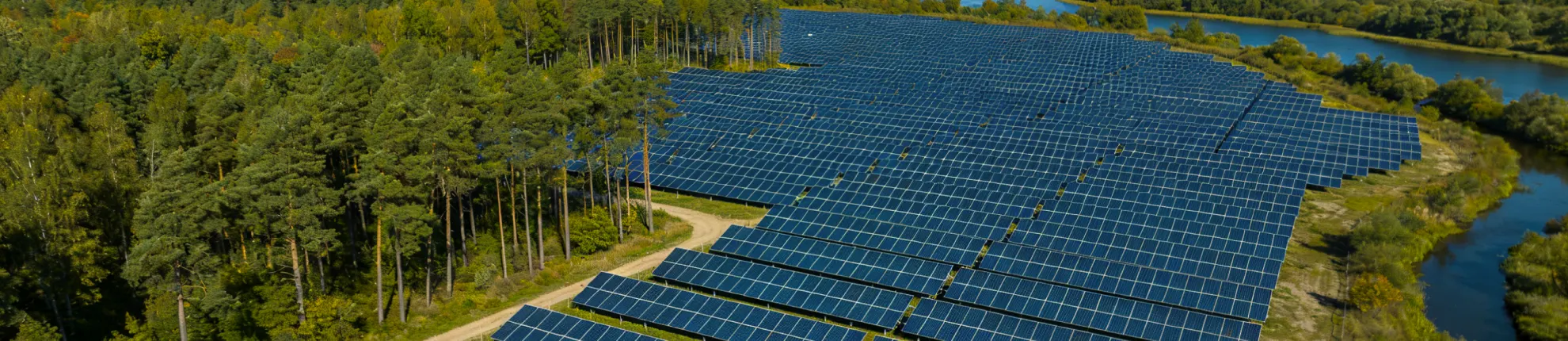
Structural Types of Steel Solar Carports
A steel solar carport is a structure pulling double duty. It's a rugged shelter protecting your vehicle from the elements, and it's a personal power station generating clean electricity. You're essentially taking a passive slab of asphalt and turning it into an active asset. That functional efficiency is why we see them popping up everywhere, from home driveways to commercial lots.
The steel frame provides the muscle you need to handle heavy snow loads and high winds, while the panels overhead work to slash your energy bills. We'll cover the structural designs and foundations available, plus waterproofing and long-term maintenance. It's the practical roadmap you need to get the project done right.
Why Use Steel?
Steel is the standard choice for carports because it gives you the best mix of strength and cost. It allows us to build wide, open structures that don't clog your parking lot with unnecessary columns. This frame does the heavy lifting to support the solar panels while shrugging off high winds and heavy snow loads.
Of course, raw steel has a natural enemy in rust. To keep your investment standing for decades, the industry go-to has long been hot-dip galvanization. This process coats the steel in a zinc bath to create a "sacrificial" shield. Basically, if the surface gets scratched, the zinc corrodes first so the structural steel underneath stays pristine.
But lately, the game is changing with Zinc-Aluminum-Magnesium (ZAM). This alloy is a significant upgrade over plain zinc because it actively heals its own cut edges and stops corrosion exactly where it tries to sneak in. With that kind of self-repairing tech, your carport can easily stand up to the elements for 20 to 25 years while requiring almost no maintenance from you.
What Is a Steel Solar Carport?
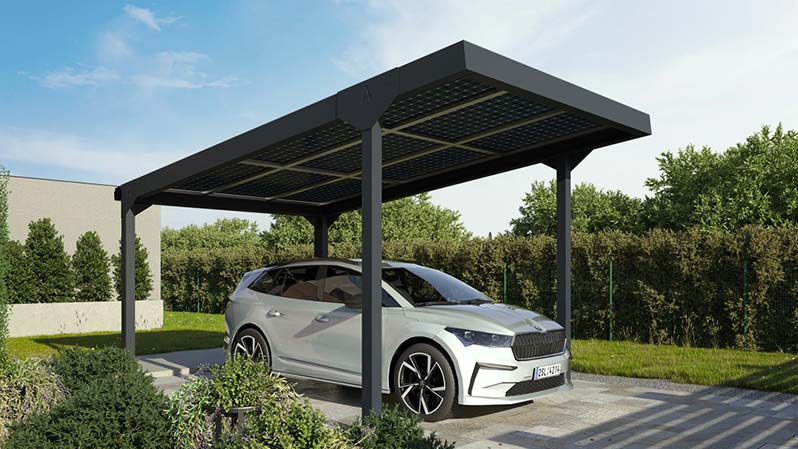
Think of a steel solar carport as doing double duty. It gives you a sturdy, sheltered spot to protect your vehicle from the elements, but instead of a standard roof, you have high-efficiency panels generating power overhead. It's more than just a steel frame; it is a fully integrated energy system that comes with the necessary wiring and inverters to channel that clean electricity directly to your home or the grid.
Common Types of Steel Solar Carports
Single-Row Cantilever
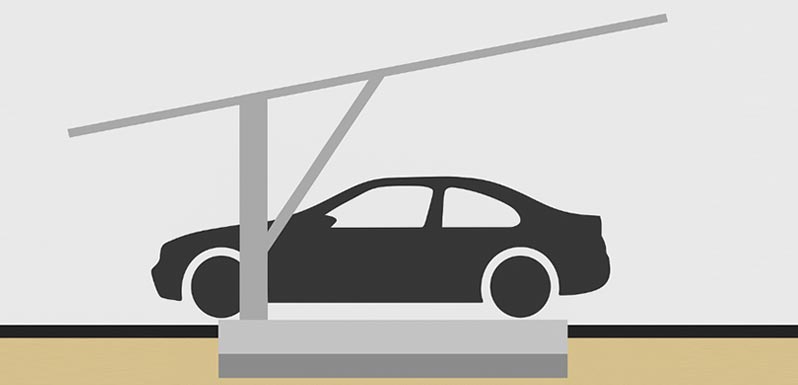
This design is a favorite for a reason. You place the support columns on just one side—usually along the curb or the back of the parking space—and the roof structure extends, or "cantilevers," out over the vehicle.
We recommend this often because it eliminates those annoying front posts that block car doors. It creates an open, accessible feel that makes parking easy for drivers. It is the ideal solution for single rows situated along the edge of a property.
Double-Row T-Frame
If you need to cover two rows of parking parked back-to-back, the T-frame is usually your most efficient option. A single line of support columns runs down the center divider between the rows, with the canopy spreading out to both sides to form a "T" shape.
This design is highly effective for large commercial lots because it lets you cover the maximum amount of area with the fewest number of steel columns. Fewer columns often mean lower material and installation costs.
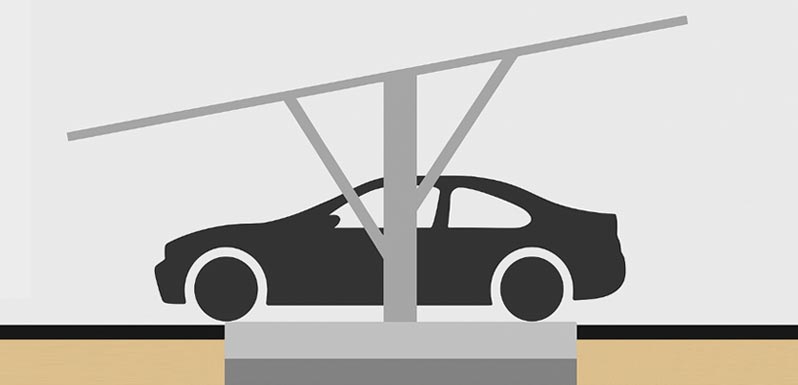
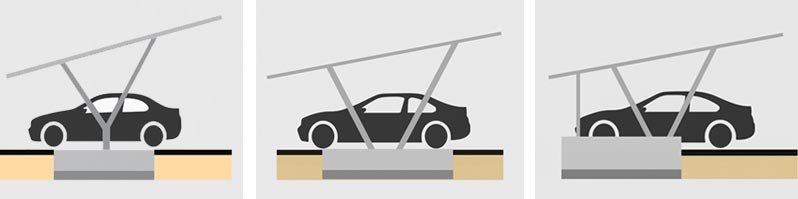
Y, V & T-V Frames
You can think of these as the architectural cousins of the T-frame. By splitting the support post into a Y or V shape, we can often support a wider canopy span while adding significant visual appeal.
While they function similarly to standard T-frames, you might choose these when the look of the structure matters as much as the power it produces. They offer a modern, premium aesthetic that many corporate campuses prefer.
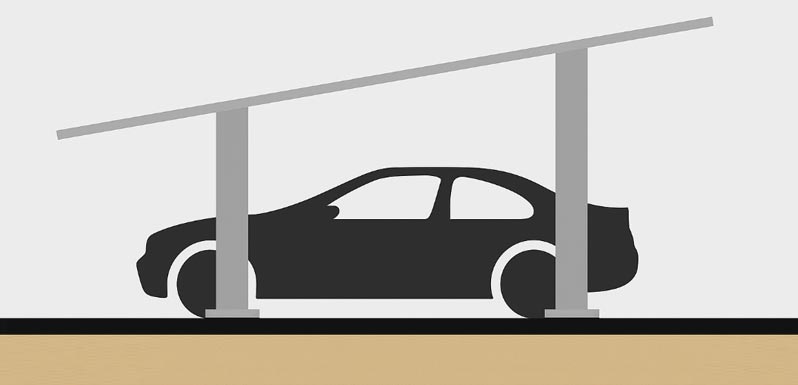
Multi-Post Frame
Sometimes, the simplest engineering is the best. The Multi-Post Frame works much like a traditional pavilion, supporting the canopy with columns on both sides of the parking row.
Since this design doesn't rely on a cantilever, the weight is distributed evenly across the structure. This balance makes it a straightforward, often more cost-effective option. It is our top recommendation for regions with heavy snow loads where that extra stability is a necessity.
Choosing the Right Roof Shape
Once you have settled on the frame layout, the roof shape is the next key decision. This isn't just about aesthetics; the shape plays a massive role in how well the structure handles water and snow.
-
The Tilted (or Flat) Roof: This is the industry standard. The panels sit on a single plane with a slight tilt—usually around 5 degrees—to ensure rainwater runs off effectively instead of pooling. It offers a clean, low-profile look that keeps the focus on utility.
-
The Pitched (Gable) Roof: Mimicking the A-frame of a traditional house, this design features two slopes meeting at a central peak. It excels at shedding heavy snow and rain. You might choose a gable roof if you need superior weather protection or if you want the carport to blend seamlessly with the architecture of nearby buildings.
Making Your Solar Carport Waterproof
It's a common assumption that a solar roof acts just like a traditional one. But in reality, most standard carports are designed primarily for shade, not rain protection. For those who want to keep their car and themselves completely dry, there are two main solutions.
1. Integrated Gutter Systems
This is usually the most robust solution for permanent structures. Instead of trying to plug the gaps, we manage the water flow.
These designs function much like a standard residential roof. Specialized mounting rails double as water channels, catching runoff from the panels and directing it into gutters. From there, the water is funneled down through the interior of the support columns.
The result is a clean, enclosed system. Mibet's Waterproof Solar Carport system is a prime example of this engineering. It ensures rainwater exits at ground level rather than splashing off the edges or dripping onto your hood.
2. Sealing the Panel Gaps
Your second option is to physically close the spaces between the modules to create a single, continuous surface.
Installers can compress rubber gaskets between the panels or apply waterproof strips that sit underneath the seams. Some systems even use a specialized overlapping design. This effectively blocks water from slipping through the array, offering you reliable shelter from the elements without needing complex internal plumbing.
Solar Carport Foundation Types
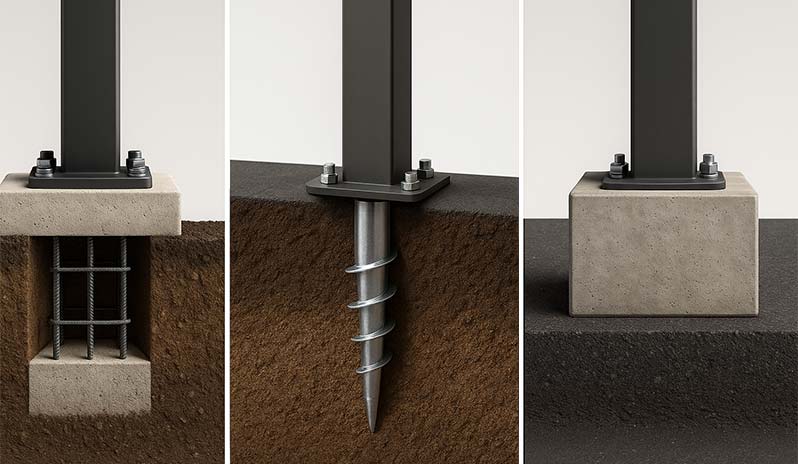
Concrete Pier Footings
This is the traditional industry standard. Installers excavate holes, set up forms, and pour reinforced concrete. Once cured, steel columns are bolted directly onto these heavy piers.
The primary advantage is stability. Concrete piers are a tried-and-true solution that resists significant seismic forces and wind loads with ease.
The tradeoff, however, is the mess and timeline. It requires excavation, pouring, and a curing period of several days before steel can even be touched. For existing parking lots, this means tearing up pavement and blocking off sections for extended periods. While the material is cheap, labor and heavy equipment often drive up the total cost.
Ground Screws
Ground screws (or helical piles) have become the modern standard for solar carports. These massive galvanized steel screws are mechanically drilled into the earth, leaving a flange ready for immediate connection.
Speed is the main selling point. There is no digging, no mixing, and no watching concrete dry. Builders can often start assembling the frame the same day the screws are driven.
This method is ideal for active businesses because it avoids ripping up large sections of asphalt. Ground screws work for about 90% of projects and can support loads exceeding 2 tons per screw. However, they aren't magic—extremely rocky terrain or loose, sandy soil with zero holding power will still require alternative methods.
Ballasted Foundations
Sometimes, digging simply isn't an option. Ballasted systems rely on gravity rather than ground penetration. Columns are bolted to large concrete blocks or steel trays that sit directly on the surface.
This is the only viable solution for sensitive sites like parking garage rooftops or capped landfills where penetrating the ground is strictly prohibited. The process is simple: place the blocks and build.
The limitation is weight. Resisting wind uplift requires significant mass, making ballasted systems impractical for large-span carports or high-wind zones. The blocks also consume physical footprint, potentially eating into parking spaces. It is a niche solution, but invaluable for the right project.
How to Choose the Right Foundation
Making the right call usually hinges on three specific variables. While a structural engineer will have the final say, here is what drives the decision:
-
Soil Conditions: A geotechnical report (soil test) is non-negotiable. Rocky ground can block ground screws, while soft clay often demands deeper concrete piers.
-
Site Logistics: Ground screws are generally preferred for retrofits to minimize disruption to active lots. On leased land, removable screws also offer more flexibility than permanent concrete.
-
Local Codes: Municipal regulations set the baseline for safety, particularly regarding frost line depth and wind load resistance.
While specialized projects might use driven I-beams, the vast majority of installations rely on one of these three methods. It is worth getting this part right from the start—a steel solar carport is only as reliable as the foundation holding it down.
How to Maintain a Steel Solar Carport?
1. Keep Modules Clear for Max Output
PV modules work best when unobstructed. Even a light layer of grime—known as soiling loss—can noticeably impact production numbers.
In most climates, rain handles the cleaning. However, in dusty regions or during long dry spells, intervention is necessary. Plan for a cleaning schedule once or twice a year using a hose or a soft brush.
-
Avoid Thermal Shock: This is a classic rookie mistake. Never spray cold water on hot panels during the peak of the day, as the sudden temperature drop can fracture the glass. Always clean in the cool of the early morning or evening.
-
Safety First: Carport structures are high. Use a brush with a long extension pole or hire a professional cleaning crew with proper lift equipment.
2. Inspecting the Steel Framework
The structural integrity of the carport is the backbone of the entire system. Thanks to modern hot-dip galvanization, rust should not be an issue for a very long time.
An annual visual inspection is recommended. Take a walk around the site and look for deep scratches that expose bare metal—often caused by vehicles scraping a column. If found, clean the area and apply a cold galvanizing spray immediately to reseal the metal.
Note for Coastal Sites: If the carport is near the ocean, salt air can accelerate corrosion. Rinsing the steel with fresh water occasionally helps prevent salt buildup.
3. Fasteners, Foundations, and Drainage
After the first year, verify that critical bolts remain snug. A pro tip: look for "torque marks"—a line of paint drawn across the nut and bolt by the installer. If the paint lines still align, the bolt hasn't moved, and no tools are needed.
-
Foundations: Inspect the concrete footings (piers). Hairline cracks are usually superficial, but significant cracking or signs that the baseplate is shifting warrant a call to a structural engineer.
-
Drainage: Carport gutters are generally oversized, making them less prone to clogging than residential ones. Still, check them after the autumn leaf fall to ensure water flows freely and no birds have nested in the cable trays.
4. The Electrical Health Check
While the steel holds everything up, the electrical components do the work. The easiest maintenance tool is your monitoring app. A sudden, unexplained drop in the energy curve often points to a problem before it is visible to the naked eye.
Every 3 to 5 years, have a qualified solar technician inspect the system. Ask them to perform a thermographic scan (infrared camera). This quickly identifies "hot spots"—loose connections generating excess heat—that need tightening before they cause a system failure.
Frequently Asked Questions
1.How long do steel solar carports last?
A quality steel solar carport is a long-term investment. The solar panels themselves typically have 25-year power warranties and often keep producing for 30 years or more.
The steel structure, however, is built to last even longer. When the steel is properly galvanized and coated, it's protected from the elements for decades. We've seen many carports from the early 2000s that are still in excellent condition.
With just minimal maintenance—like touching up a deep scratch if one occurs—there's no reason a well-built carport can't last 40 or 50 years. It’s an asset that will be shading and powering your property for a generation.
2.Does steel have advantages over aluminum?
Both materials are used, but they have different strengths.
Steel's primary advantages are strength and cost-effectiveness for large structures. Because steel is so stiff, a single beam can span a wider distance. This is crucial for creating open, double-wide parking spots and for handling heavy loads like snow or high winds.
Aluminum's main benefit is that it's lightweight and naturally rust-proof without any coating. This makes it a solid choice for highly corrosive coastal areas or for smaller, light-duty residential carports.
The trade-off is that aluminum is more flexible. To get the same strength as steel, the aluminum beams often need to be bulkier, which can increase the price. For most large parking lots and commercial projects, steel is the standard choice. It provides the best balance of robust performance and cost.
3.How much does a single-car steel solar carport cost?
Let's use a common example. A professionally installed single-car carport, which typically uses a 5kW system, will cost between $15,850 and $20,500. This is the price before any incentives.
Your net cost drops significantly after applying the main federal incentive. The 30% Residential Clean Energy Credit brings your final investment into the $11,095 to $14,350 range.
Your payback period, or the time it takes to recoup the investment, is typically 8 to 12 years. This varies based on your local electricity rates and solar irradiance—which is simply the amount of direct sunlight your area receives. Over the system's 25-year warranty, owners can expect to see total net savings between $16,500 and $22,650.
4.What is the ideal height for a solar carport?
| Vehicle Type | Vehicle Height | Recommended Clearance | Center Clearance (Approx.) | Notes |
|---|---|---|---|---|
| Compact/Sedan | 4.5 - 5.0 ft | 7 - 8 ft | 8.0 - 9.0 ft | Standard height, ample clearance. |
| SUV/Small Truck | 5.5 - 6.5 ft | 8 - 9 ft | 9.0 - 10.0 ft | 8 ft is sufficient; 9 ft is more comfortable. |
| Full-Size Truck/Van | 6.5 - 7.0 ft | 9 - 10 ft | 10.0 - 11.0 ft | Vehicle measurement must include any roof accessories. |
| RV/Camper | 9.0 - 11.0 ft | 12 - 14 ft | 13.0 - 15.0 ft | Requires a specialized high-clearance design. |
5.How do I choose the right tilt angle for my solar carport?
The tilt angle of your panels directly impacts how much energy they capture. While you can get complex, there are two excellent rules of thumb that deliver great results.
For a fixed-tilt system, the most common and effective approach is to set the angle equal to your property's geographical latitude. This gives you a great balance for the sun's different heights throughout the year. For most of the continental U.S., this means an optimal tilt between 30 and 45 degrees.
If you want to get even more precise—especially for sites between 25° and 50° latitude—we'll share an advanced formula. By setting the tilt to (Latitude * 0.76) + 3.1 degrees, you can boost your total energy capture by as much as 4% compared to the simpler latitude rule.
Here is a list of the sources used to create this article.
-
https://galvanizeit.org/galvanize-it-online-seminar/why-hot-dip-galvanizing/corrosion-protection
-
https://gaa.com.au/2023/03/30/how-long-to-galvanized-coatings-last/
-
https://www.zincollombarda.it/en/hot-dip-galvanizing-lifespan-durability-guide/
-
https://shedplans.org/shed-foundation/concrete-pier-foundation/
-
https://www.americangroundscrew.com/wp-content/uploads/2020/03/ESR-4226.pdf
-
https://www.irs.gov/credits-deductions/residential-clean-energy-credit
-
https://www.energysage.com/solar/alternatives-to-rooftop-solar/what-is-a-solar-panel-carport/
-
https://plan7architect.com/how-big-should-a-carport-be-size-guide-ai2/
-
https://www.ecoflow.com/us/blog/solar-panel-angle-north-america
-
https://www.solarpaneltilt.com/

Tao Chen
Marketing Director & IT Director · MIBET ENERGY
MIBET is a global designer and manufacturer of solar mounting systems. With over 10 years of professional experience, Tao Chen regularly contributes articles to our blog on structural design, installation, and maintenance, offering valuable guidance for navigating the complexities of solar projects.